
As these sensors are using high-accuracy GNSS engines, they are ideal for performing non-contact sensing of velocity, providing signal output data on CAN, digital and serial. This allows for easy integration with data loggers and testing applications.
You can configure the digital output as either a digital speed pulse output or a lap beacon marker.
You can use the speed sensor straight from the box and it will output digital signals according to the default settings or you can configure the settings to better suit your purpose.
The VBOX Speed Sensors are also compatible with the VBOX Test Suite software.
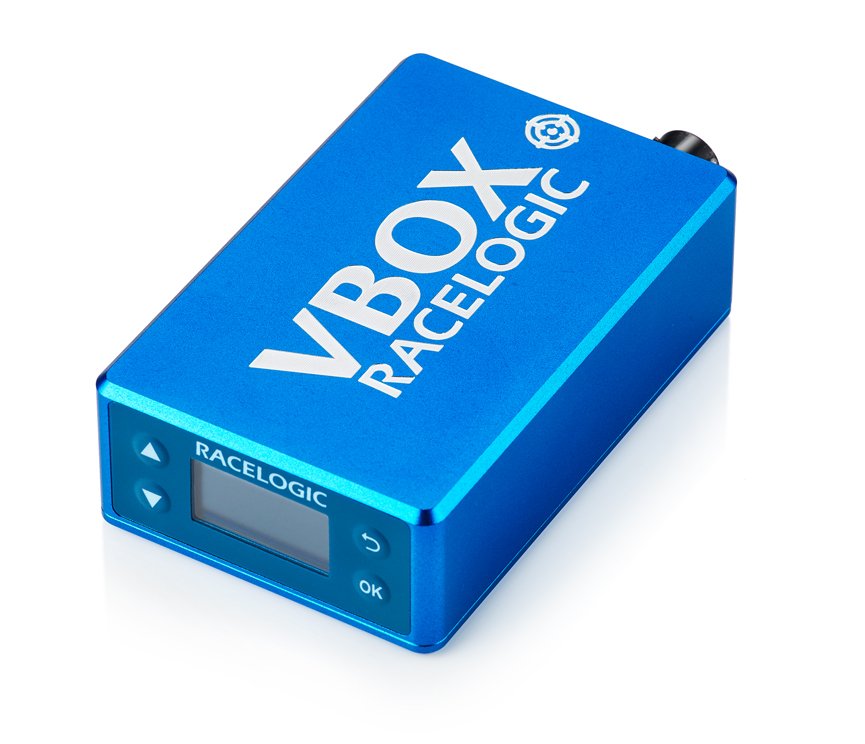
As these sensors are using high-accuracy GNSS engines, they are ideal for performing non-contact sensing of velocity, providing signal output data on CAN, digital and serial. This allows for easy integration with data loggers and testing applications.
You can configure the digital output as either a digital speed pulse output or a lap beacon marker.
You can use the speed sensor straight from the box and it will output digital signals according to the default settings or you can configure the settings to better suit your purpose.
The VBOX Speed Sensors are also compatible with the VBOX Test Suite software.
- Multi-GNSS
- RS232 Serial Output
- CAN Bus Output
- Live Data Monitoring
- Digital Output
- OLED Display
- Dust & Waterproof
- ISO17025 Calibrated
| VBOX 25 Hz Speed Sensor | VBOX 100 Hz Speed Sensor (v5) | |
|---|---|---|
| Update Rate | 25 Hz | 100 Hz |
| Position Accuracy | 1.3 m position accuracy (with SBAS) | <1 cm position accuracy with RTK |
| Stopping Distance Accuracy | ±10 cm brake distance accuracy (Trigger) | ±1.8 cm brake distance accuracy (Trigger) |
Complete information about the product and how to use it.
Detailed technical information about the product.
Updating firmware and understanding version changes.
Help with common questions, issues, and additional guidance