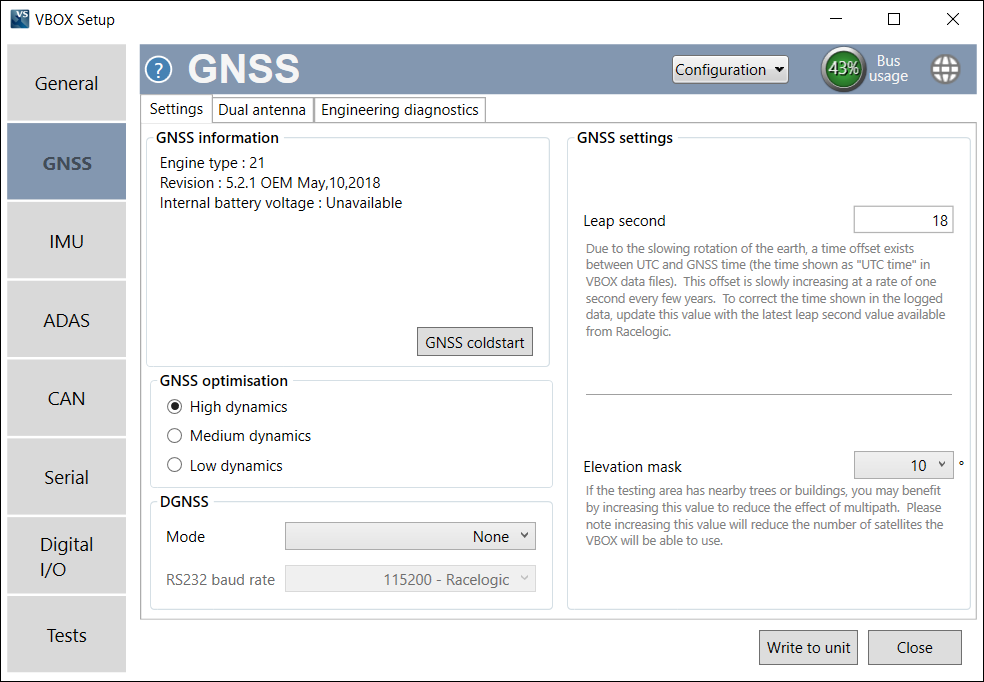
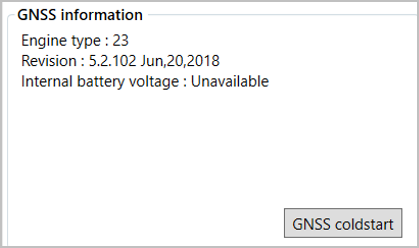
The GNSS menu in VBOX Setup, connected to a VBOX 3iS unit, contains GNSS receiver information and provides the ability to set the dynamic mode, DGNSS mode, leap second, elevation mask and to perform a GNSS coldstart.
From the GNSS menu, you can also configure the Dual Antenna settings for VBOX 3iS Dual Antenna RTK units.
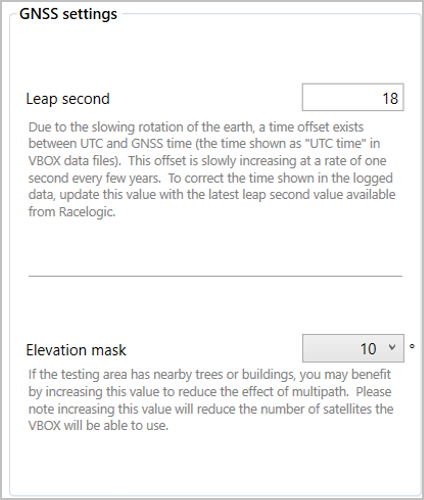
Leap Second
The leap second value can be changed if required. This was increased to 18 seconds as of December 2016 - more information on this is available here.
Elevation Mask
Allows you to change the elevation mask, selectable from 10° - 25° (10° by default). If the testing area has nearby trees or buildings, you may benefit from increasing this value to reduce the effect of multipath.
More information on this is available here.
Leap Second
The leap second value can be changed if required. This was increased to 18 seconds as of December 2016 - more information on this is available here.
Elevation Mask
Allows you to change the elevation mask, selectable from 10° - 25° (10° by default). If the testing area has nearby trees or buildings, you may benefit from increasing this value to reduce the effect of multipath.
More information on this is available here.
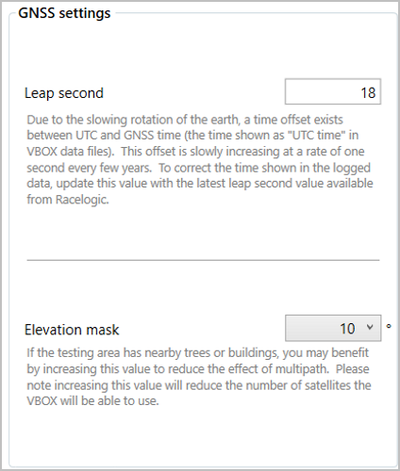
Note: Increasing the Elevation Mask value will reduce the number of satellites the VBOX will be able to use.
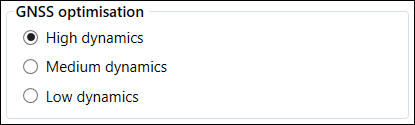
This option allows you to change the sensitivity of the GNSS engine.
- High dynamics (default) - For high dynamic applications such as brake stop testing.
- Medium dynamics - Suitable for all other testing.
- Low dynamics - For less dynamic applications, such as steady state speed measurement or coastdown testing.
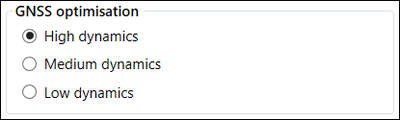
This option allows you to change the sensitivity of the GNSS engine.
- High dynamics (default) - For high dynamic applications such as brake stop testing.
- Medium dynamics - Suitable for all other testing.
- Low dynamics - For less dynamic applications, such as steady state speed measurement or coastdown testing.
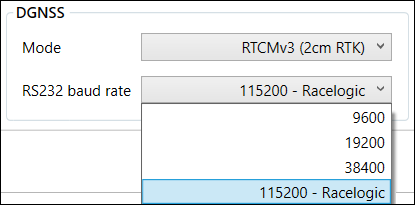
This option allows you to select whether the VBOX 3iS uses differential GNSS. Use the drop-down menus to select the desired mode and baud rate.
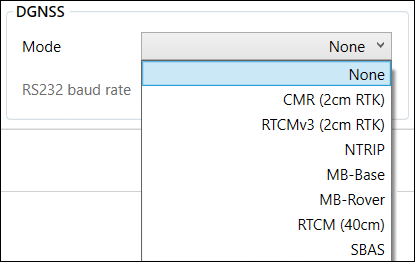
Mode
- None (default) - Differential GNSS is off.
- CMR (2 cm RTK) - 2 cm correction (Trimble standard message type).
- RTCMv3 (2 cm RTK) - 2 cm correction (RTCM standard message type). This is the recommended setting.
- NTRIP - Internet-based subscription service, more information on this can be found here.
- MB-Base - Mode for use in Moving Base ADAS applications.
- MB-Rover - Mode for use in Moving Base ADAS applications.
- RTCM (40 cm) - the VBOX 3iS receives RTCM corrections via a Racelogic telemetry module and a locally placed Base Station. Contact Racelogic or your local agent for more details.
- SBAS - SBAS differential corrections are received from the nearest Geo-stationary GPS-SBAS satellite.
RS232 baud rate
Sets the DGNSS serial rate, and is available to select when a DGNSS mode option other than None is selected. To ensure that the VBOX 3iS receives the DGNSS correction signal, the correct RS232 baud rate must be set. All Racelogic blue-boxed radios use 115200 kbit/s, Satel grey-boxed radios use either 19200 kbit/s or 38400 kbit/s.
Model Limitations
This tab will only be visible if VBOX Setup is connected to a VBOX 3iS Dual Antenna RTK unit.
This area is used to configure the Dual Antenna mode of VBOX 3iS Dual Antenna RTK.
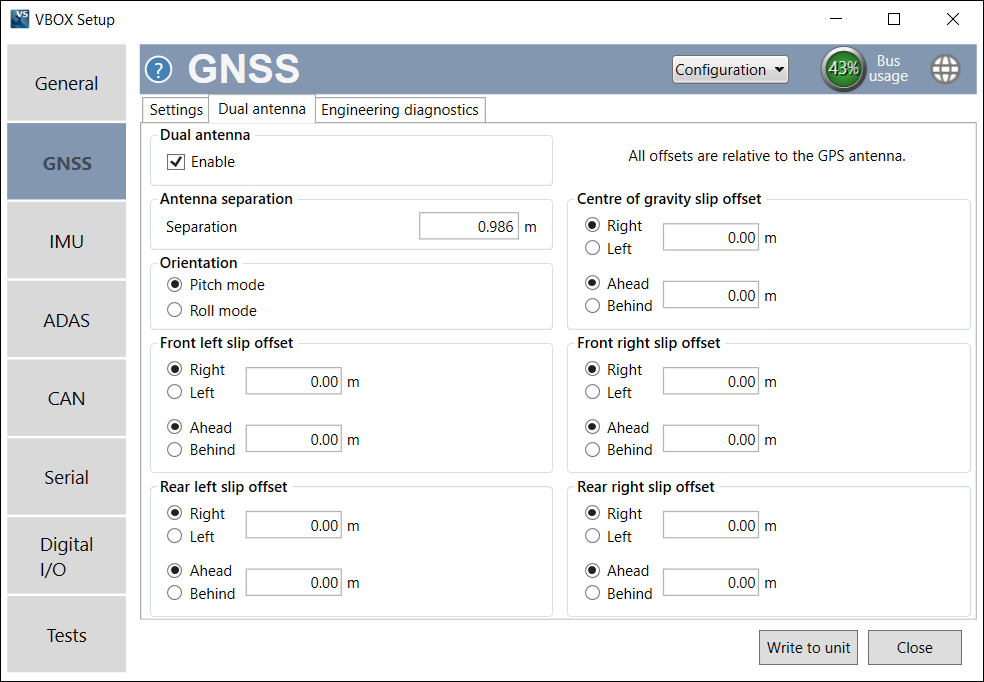
Dual Antenna
Enable or disable Dual Antenna mode.

Dual Antenna
Enable or disable Dual Antenna mode.

Antenna Separation
Apply an antenna separation distance.

Antenna Separation
Apply an antenna separation distance.

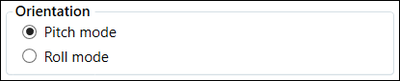
Orientation
Switch between Pitch and Roll measurements during testing.
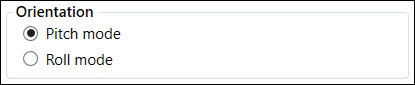
Orientation
Switch between Pitch and Roll measurements during testing.
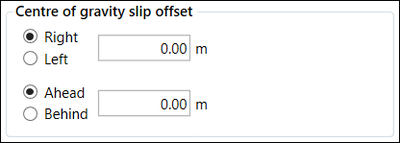
Centre of gravity slip offset
Configure the slip translation offset from the centre of gravity point for the vehicle to the GNSS antenna.
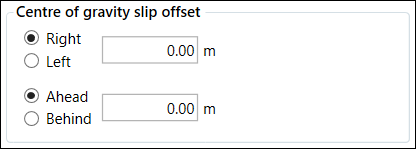
Centre of gravity slip offset
Configure the slip translation offset from the centre of gravity point for the vehicle to the GNSS antenna.
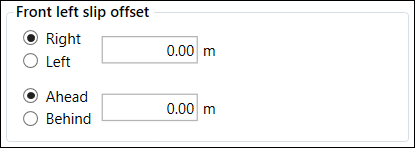
Front left slip offset
Configure the slip translation offset from the front left reference to the GNSS antenna.
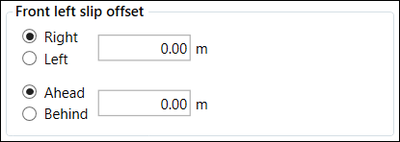
Front left slip offset
Configure the slip translation offset from the front left reference to the GNSS antenna.
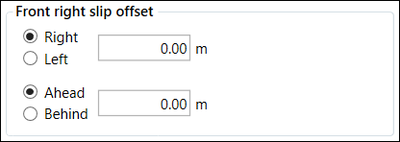
Front right slip offset
Configure the slip translation offset from the front right reference to the GNSS antenna.
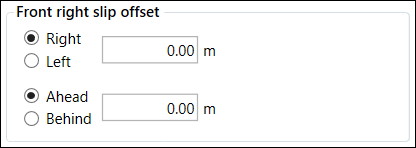
Front right slip offset
Configure the slip translation offset from the front right reference to the GNSS antenna.
Rear left slip offset
Configure the slip translation offset from the rear left reference to the GNSS antenna.
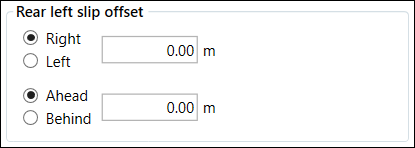
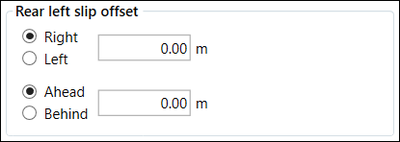
Rear left slip offset
Configure the slip translation offset from the rear left reference to the GNSS antenna.
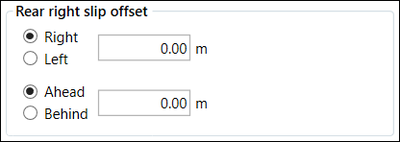
Rear right slip offset
Configure the slip translation offset from the rear right reference to the GNSS antenna.
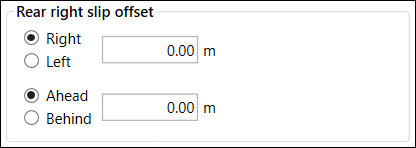
Rear right slip offset
Configure the slip translation offset from the rear right reference to the GNSS antenna.
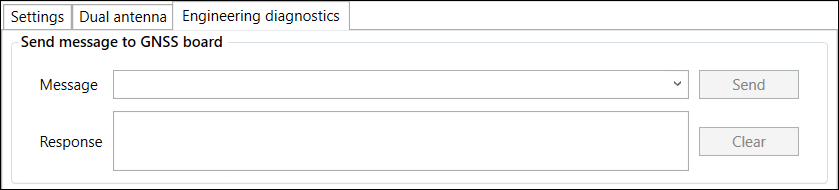
This area is used to set non-standard settings in the GNSS engine. This should only be used under advice from a Racelogic support technician.