When the LapTimer unit is logging, you will see a small, white scrolling bar move back and forth across the bottom of the screen (except in Predictive Lap Timing mode).
When using the Speed Display mode, you can start and stop the data logging by pressing the OK button.
When the LapTimer unit is logging, you will see a small, white scrolling bar move back and forth across the bottom of the screen (except in Predictive Lap Timing mode).
When using the Speed Display mode, you can start and stop the data logging by pressing the OK button.
The LapTimers have many different display modes you can use to view the data. Use the up and down buttons on the unit to cycle through the available display modes.
You can show or hide display mode types in the available display modes via the Display Modes Menu.
The following display modes are available.
NOTE
The data options for all display modes are always calculated by the unit, even if you choose not to display it.
Before using this mode, you need to have a set start/finish line. Make sure that you have selected a track layout through the main menu or set a start line manually.
Before you cross the start/finish line for the first time, the screen will show Waiting for start line and the distance from your current location to it.
When you first cross the line and during the first lap, the LapTimer will create a reference lap.
The second time you cross the start line, the LapTimer will start predicting the time.
Before using this mode, you need to have a set start/finish line. Make sure that you have selected a track layout through the main menu or set a start line manually.
Before you cross the start/finish line for the first time, the screen will show Waiting for start line and the distance from your current location to it.
When you first cross the line and during the first lap, the LapTimer will create a reference lap.
The second time you cross the start line, the LapTimer will start predicting the time.
IMPORTANT
If you set a new start/finish line while the LapTimer is logging, the Predictive Lap Timing mode will start creating a new reference lap.
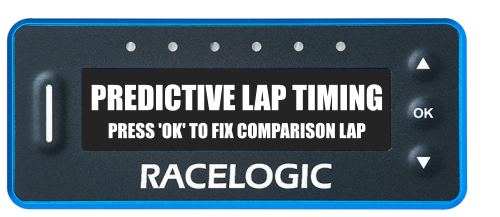
The reference lap will be replaced with any subsequent quicker lap time. However, you can fix a reference lap to prevent faster lap times from replacing it.
Fix the reference lap time by pressing the OK button at any time during your lap. Pressing the OK button will either fix the lap you are currently driving or fix a lap saved in the memory. You can choose which one your LapTimer will use under Fixed Lap Mode in the Predictive Lap Timing Settings.
If you power-cycle the unit, clear the lap timing data or reset the start/finish, the fixed reference lap will be removed. If you wish to retain a fixed reference lap, make sure that the lap is saved to the SD card. You can then load it into the device when you need it.
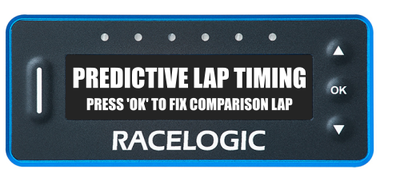
The reference lap will be replaced with any subsequent quicker lap time. However, you can fix a reference lap to prevent faster lap times from replacing it.
Fix the reference lap time by pressing the OK button at any time during your lap. Pressing the OK button will either fix the lap you are currently driving or fix a lap saved in the memory. You can choose which one your LapTimer will use under Fixed Lap Mode in the Predictive Lap Timing Settings.
If you power-cycle the unit, clear the lap timing data or reset the start/finish, the fixed reference lap will be removed. If you wish to retain a fixed reference lap, make sure that the lap is saved to the SD card. You can then load it into the device when you need it.
NOTE
When you have fixed a reference lap, you will see a message confirming your selection on the screen and you will see a padlock icon in the top left corner.
- If you fix a stored lap the icon will appear instantly.
- If you fix the current lap, the icon will appear when the lap you are currently driving has been completed.
If you need to delete the reference lap stored on your LapTimer unit, you can do this while displaying the Predictive Lap Timing Mode.
Press and hold the OK button for 4 seconds to make the unit clear the stored reference lap and all lap timing data.
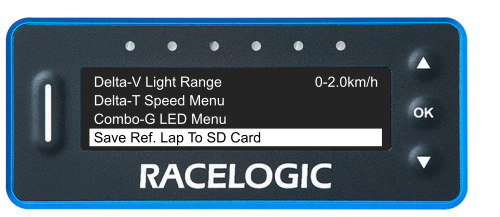
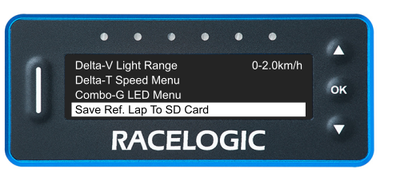
This feature allows you to save a reference lap for future use.
Insert an SD card into the VBOX LapTimer and use the Save Ref. Lap to SD Card option.
Menu → Predictive Lap Timing Menu → Save Ref. Lap To SD Card → OK
You can read more about saving reference laps in the information about the Predictive Lap Timing Menu.
This feature allows you to save a reference lap for future use.
Insert an SD card into the VBOX LapTimer and use the Save Ref. Lap to SD Card option.
Menu → Predictive Lap Timing Menu → Save Ref. Lap To SD Card → OK
You can read more about saving reference laps in the information about the Predictive Lap Timing Menu.
NOTE
The vehicle must be stationary for the LapTimer to transfer the file to the SD card.
To load a reference lap file stored from a previous session, copy the required file to an SD card and load the card into the VBOX LapTimer.
Menu → Predictive Lap Timing Menu → Load Ref. Lap From SD Card → OK
The file can have any name, however, it must be:
- saved in the Data folder on the SD card
- the only .REF file present in the Data folder
You can use the Circuit Tools software to create a reference lap. Refer to the 'How to Create a Reference Lap Using Circuit Tools' article for more information.
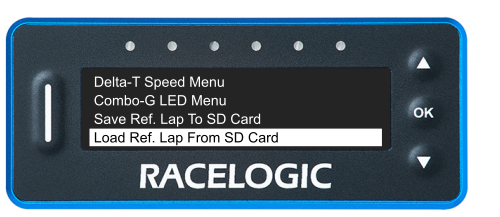
To load a reference lap file stored from a previous session, copy the required file to an SD card and load the card into the VBOX LapTimer.
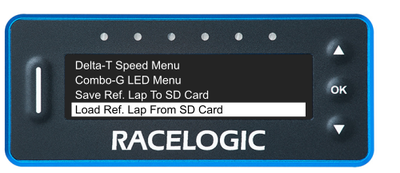
Menu → Predictive Lap Timing Menu → Load Ref. Lap From SD Card → OK
The file can have any name, however, it must be:
- saved in the Data folder on the SD card
- the only .REF file present in the Data folder
You can use the Circuit Tools software to create a reference lap. Refer to the 'How to Create a Reference Lap Using Circuit Tools' article for more information.
NOTE
The vehicle must be stationary for the LapTimer to transfer the file from the SD card.
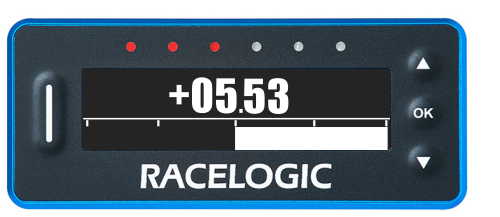
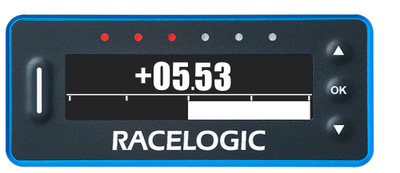
The default predictive lap timing display shows a continuously updated time difference with the +/- to the reference lap.
When a lap is completed, it will give a final lap time and total time difference to the reference lap. If you achieve a faster time than the reference, the time difference will be negative.
You can also enable a Delta T bar graph in the settings and select the time shown on the bar graph ( 2, 5, 10 or 30 seconds).
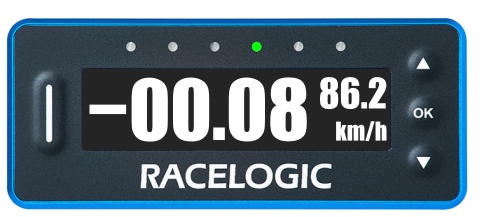
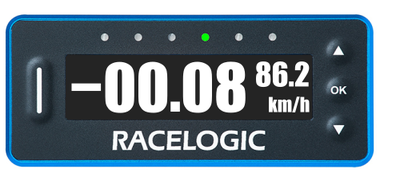
All lap times and split times are interpolated to 0.01-second resolution.
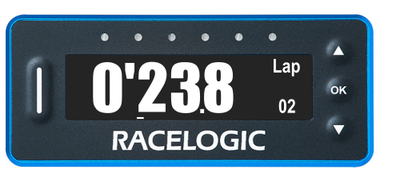
In this mode, the screen can display either a live rolling lap time or a static last lap time and the lap count. You can change this in the Lap Timing Menu.
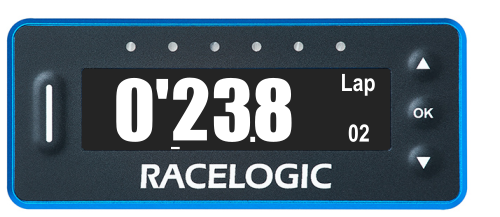
In this mode, the screen can display either a live rolling lap time or a static last lap time and the lap count. You can change this in the Lap Timing Menu.
The difference between the new lap time and the best lap time will be shown with a + or – sign. A ‘–’ is shown when a faster than best is achieved and a ‘+’ is shown for a slower than best.
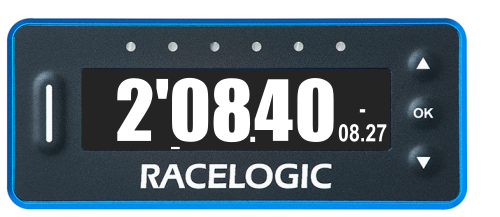
The difference between the new lap time and the best lap time will be shown with a + or – sign. A ‘–’ is shown when a faster than best is achieved and a ‘+’ is shown for a slower than best.
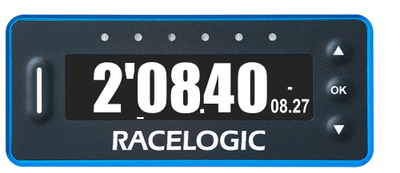
If you have set up split line in the Lap Timing menu, the LapTimer will display split times for 2-20 seconds when you cross the split line.
Go to Menu → Lap Timing Menu → Split Time Display Period to set this up.
You can also set a new start/finish line while using the Lap Timing screen by pressing the OK button. If you do this by mistake, you can cancel the action by pressing the Down button within 5 seconds.
If you also require split lines or a separate finish, use the ‘set start and splits’ option in the Lap Timing Menu.
When you set a new start/finish line, the unit will immediately start lap timing from where the new start line was set.
If you cancel the setting of the new start/finish line, the LapTimer will retain the position of the old start/finish line and continue timing from that.
NOTE
The vehicle must be moving >10 km/h before you can set a Start/Finish Line.
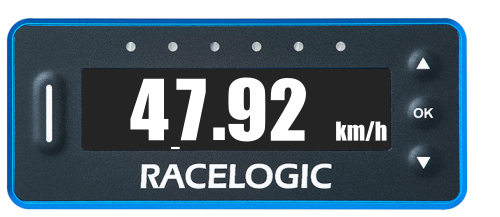
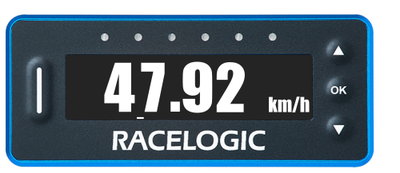
In Speed mode, the screen will display a large clear speed value with up to 2 decimal places. You can set the speed to display in kph, mph or knots. You can adjust the number of decimal places displayed.
You can change the speed units and decimal spaces used to display the speed in the Speed Menu.
Press the OK button when displaying Speed mode to start/stop the data logging.
In Speed mode, the screen will display a large clear speed value with up to 2 decimal places. You can set the speed to display in kph, mph or knots. You can adjust the number of decimal places displayed.
You can change the speed units and decimal spaces used to display the speed in the Speed Menu.
Press the OK button when displaying Speed mode to start/stop the data logging.
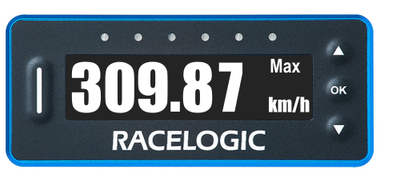
In max speed mode, the screen will show the highest achieved speed value to 0, 1 or 2 decimal places.
Press the OK button when displaying Max Speed mode to reset the displayed maximum speed value.
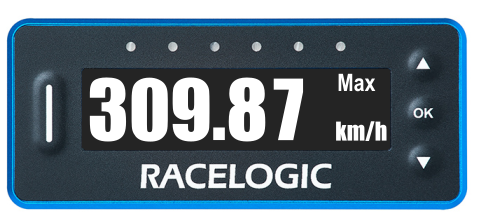
In max speed mode, the screen will show the highest achieved speed value to 0, 1 or 2 decimal places.
Press the OK button when displaying Max Speed mode to reset the displayed maximum speed value.
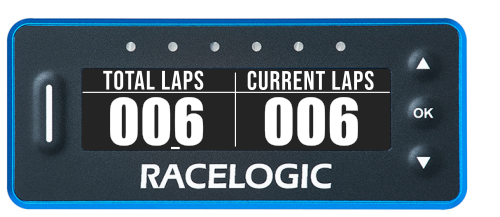
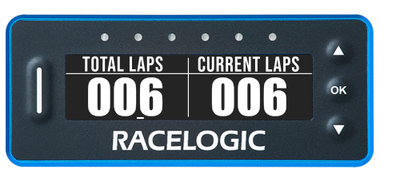
The lap count screen will display 2 counters. On the left-hand side of the screen, you can see the total lap count – this counter can only be reset by restarting (power-cycling) the LapTimer.
On the right-hand side of the screen, you can see the current laps – reset this counter by removing the SD card from the LapTimer unit.
The lap count screen will display 2 counters. On the left-hand side of the screen, you can see the total lap count – this counter can only be reset by restarting (power-cycling) the LapTimer.
On the right-hand side of the screen, you can see the current laps – reset this counter by removing the SD card from the LapTimer unit.
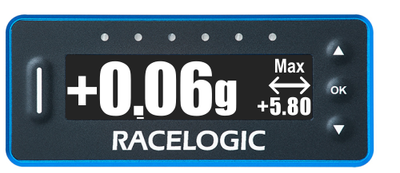
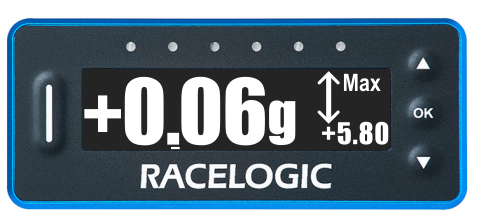
This screen displays the current longitudinal g in the vehicle as a live display as well as the maximum longitudinal g reached. This helps the driver push the vehicle that little bit harder when braking.
Press the OK button when displaying the Longitudinal G mode to reset the displayed maximum g value (Peak g).
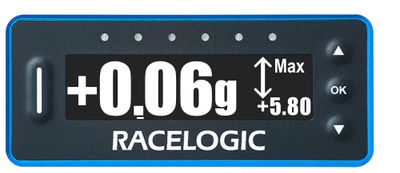
This screen displays the current longitudinal g in the vehicle as a live display as well as the maximum longitudinal g reached. This helps the driver push the vehicle that little bit harder when braking.
Press the OK button when displaying the Longitudinal G mode to reset the displayed maximum g value (Peak g).
This screen displays the current lateral g in the vehicle as a live display as well as the maximum lateral g reached. This helps the driver push the vehicle that little bit harder in corners.
Press the OK button while displaying the Lateral G mode, to reset the displayed maximum g value (Peak g).
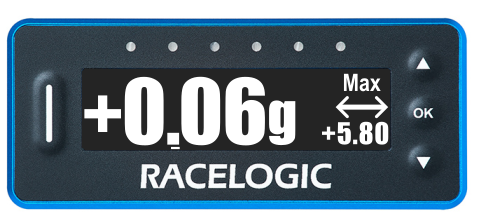
This screen displays the current lateral g in the vehicle as a live display as well as the maximum lateral g reached. This helps the driver push the vehicle that little bit harder in corners.
Press the OK button while displaying the Lateral G mode, to reset the displayed maximum g value (Peak g).