
On 31 December 2016, another leap second was added to GPS time, increasing the GPS-to-UTC offset to 18 seconds.
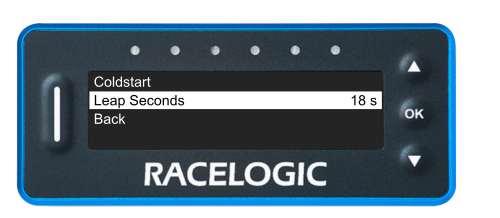
The GPS-to-UTC offset is configurable on VBOX LapTimer units and can be adjusted via the device menu.
Go to MENU → GNSS Menu → Leap Seconds to change the configured offset value.
UTC time is the time we all live by.
It is affected by leap years and also leap seconds.
GPS time started on the 1st January, 1980, and was accurate to UTC at this point. Since then, there have been 18 leap seconds introduced, and there is now an 18-second difference between GPS time and UTC time.
"Because the Earth's rotation speed varies in response to climatic and geological events, UTC leap seconds are irregularly spaced and unpredictable. Insertion of each UTC leap second is usually decided about six months in advance by the International Earth Rotation and Reference Systems Service. When needed to ensure that the difference between the UTC and UT1 (GMT) readings will never exceed 0.9 second.' Instead of reprogramming each satellite’s internal clock with every leap second added, it was decided that an easier method would be to include the current number of leap seconds in the downloaded navigational data. GPS engines would then be able to apply this offset."
Source: Leap second - Wikipedia
When a GPS engine is coldstarted, and its entire almanac has been erased, it will take approximately 12 minutes for it to receive a full package of navigational data from satellites.
This is purely down to the amount of time it takes the satellite to send down a full series of messages to the antenna, and where in the message the leap second offset detail is stored.
Some GPS engines retain the leap second information to avoid time jumps. In this case, time jumps will only occur if the leap second information is found to have changed, which would only be when a new leap second is introduced.